Verified
I used Nabdol daily after work because my knees were stiff on stairs. Week one was subtle, then by week three I felt less ‘creaky’ in the evenings.
16 Apr 2026

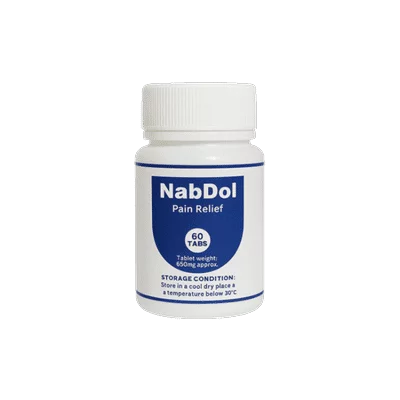
NabDol Capsules GH is an oral tablet for joint pain relief. It is for adults who have stiffness, aches, or reduced mobility. It aims to calm pain signals and support more comfortable joint function during daily activity.
Nabdol Capsules GH is an oral tablet used for joint pain relief in adults who struggle with stiffness, aches, or reduced mobility. It is designed for people who want day-to-day support with movement while keeping dosing simple.
People typically consider Nabdol when joint pain is linked to activity, long standing hours, age-related stiffness, or recovery after minor strains.
Nabdol is marketed for joint pain relief, but without the confirmed ingredient list you should not assume it works the same way as an NSAID such as ibuprofen. NSAIDs have a clear COX-inhibition mechanism and well-mapped risks, while joint-support formulas vary widely by composition. EMA safety summaries in 2026 still separate NSAID risk management from supplement-style joint products because the evidence base and adverse-effect profiles differ . If you need predictable, fast anti-inflammatory action, ask a clinician what fits your diagnosis.
Also think about interactions. Even supplements can interact with antihypertensives, diabetes medicines, anticoagulants, and anti-inflammatory pain medicines. EMA interaction discussions for herbal and supplement-like products focus on exactly this problem: patients combine products without counting the total effect load [4].
Nabdol may not be suitable if you have reacted to similar joint or pain tablets before, if you are pregnant or breastfeeding without medical advice, or if you have a sensitive stomach with past ulcers, bleeding, or severe reflux.
Avoid it unless a clinician confirms it is safe if you have liver or kidney disease, or if you take blood thinners such as warfarin or multiple antiplatelet medicines.
Do not use it for children, and be cautious about mixing it with other supplements or medicines for blood pressure, diabetes, or pain because interactions are possible.
NabDol Capsules Ghana has side effects that depend heavily on its ingredient profile, your medical history, and what other medicines you use. Since the exact formula is not listed in the available product data, the safest approach is to describe the most typical side-effect patterns seen with oral joint-support and pain-relief tablets.
Possible side effects (more common patterns):
Less common but more serious “stop and get help” patterns:
People don’t fail pain products because they “don’t work”; they often fail them because of preventable habits.
If pain improves, some people naturally move more and then flare from overdoing it. That rebound can be activity-related rather than medicine failure.
In clinical practice, clinicians tend to sort joint pain into two buckets: inflammatory pain (warmth, swelling, morning stiffness that lasts) and mechanical pain (worse with movement, better with rest). Nabdol is usually chosen by patients with the second pattern, or as “background support” when people are already doing physiotherapy, weight management, or strengthening work. WHO guidance on musculoskeletal pain emphasises pacing activity, strengthening, and using pain-relief options to keep function up rather than chasing a perfect pain score [1]. Many doctors will also ask about stomach sensitivity and blood pressure before they agree with any long-term pain product choice.
Some people feel a change within several days, but joint-support effects often take a few weeks of steady use before you can judge it fairly. If your pain is inflammation-driven (swollen, hot, very tender), you may need a clinician-led plan rather than relying on a supportive tablet. As of 2026, WHO musculoskeletal pain guidance keeps function and mobility as the main target, not instant symptom elimination . If you see no change after about 4 weeks, reassessment makes sense.
Nabdol is marketed for joint pain relief, but without the confirmed ingredient list you should not assume it works the same way as an NSAID such as ibuprofen. NSAIDs have a clear COX-inhibition mechanism and well-mapped risks, while joint-support formulas vary widely by composition. EMA safety summaries in 2026 still separate NSAID risk management from supplement-style joint products because the evidence base and adverse-effect profiles differ . If you need predictable, fast anti-inflammatory action, ask a clinician what fits your diagnosis.
People with a history of severe allergies, stomach ulcer/bleeding, significant liver or kidney disease, or those using anticoagulants should avoid Nabdol unless a clinician has reviewed the full situation. Pregnancy and breastfeeding also deserve extra caution because “joint supplements” can contain botanicals with limited safety data. WHO guidance in 2026 highlights risk-based triage: serious symptoms first, self-care options second . If your joint is hot, red, and swollen, treat it as urgent assessment territory.
Long-term use depends on tolerability and on what the ingredients are, since different components carry different chronic-use risks. A sensible approach is periodic breaks and check-ins on whether it still adds value, rather than staying on autopilot for months. EMA documents on herbal and supportive products emphasise time-limited trials and reassessment when benefit is unclear . If you need daily pain relief for more than a few weeks, consider a proper evaluation for osteoarthritis, inflammatory arthritis, or nerve pain.
A realistic limitation: if pain is coming from a significant injury, gout flare, nerve compression, or advanced arthritis, a tablet like Nabdol may feel too mild on its own. You may still need diagnosis and a targeted plan.
