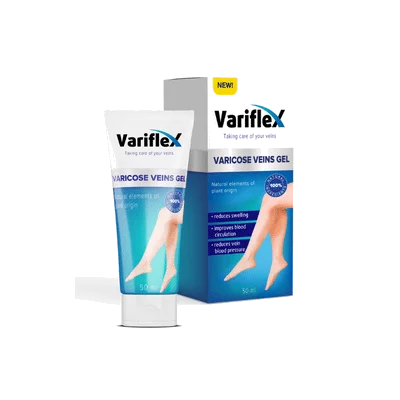
Variflex is a topical gel for adults with mild varicose-vein-related leg discomfort. Applied to intact skin, it supports a soothing massage routine and provides local cooling comfort without correcting damaged vein valves.
Description
Variflex is a 50 ml topical gel formulated for local use on legs affected by varicose veins. It contains natural elements and belongs to the category of external topical comfort-care products for varicose-vein symptoms. It is intended for adults and is applied to intact skin.
Composition
Variflex contains active and auxiliary ingredients selected for topical support of the skin and superficial veins. The exact composition, concentrations, and possible allergens should be checked in the current manufacturer’s instructions before use.
Dosage and usage
Use Variflex externally on the skin of the legs. Wash hands before and after application, then spread a thin, even layer over the selected area without applying it to broken, ulcerated, infected, or irritated skin.
A practical routine is:
Clean and dry the skin.
Apply a thin layer of Variflex to the affected leg area.
Massage gently upward until the gel has absorbed.
Allow the skin to dry before dressing.
Avoid contact with eyes, mouth, genital areas, and other mucous membranes.
Do not cover freshly applied gel with an airtight dressing unless a clinician has specifically advised it. Occlusion can increase skin exposure and may aggravate irritation.
If the gel gets into the eyes, rinse with clean running water. If a child accidentally swallows the product, seek urgent medical advice and provide the product name.
A small amount is usually easier to control than a thick layer. Applying extra gel does not make visible veins fade faster and can leave the skin sticky or irritated.
How it works
Variflex is designed to support venous comfort by helping reduce the sensation of heaviness, tension, and fatigue in the legs. Its local action may promote a more comfortable skin condition when used as directed, but it does not replace medical assessment of persistent or severe symptoms.
Indications
Variflex is a varicose veins gel for external skin application and local comfort. It may be used as part of a gentle massage routine for symptoms such as heaviness, tired legs, mild evening swelling, itching, or aching after prolonged standing. It is intended for local comfort rather than correction of venous valve problems.
Comparison
Variflex is a local topical option. It has a different role from compression therapy or vein procedures used for clinically significant venous disease.
Approach
Main role
Key limitation
Variflex topical gel
Local comfort care and gentle massage routine
Does not close or remove enlarged veins
Compression therapy
Supports venous return and can reduce swelling in suitable patients
Requires correct fit and may be unsuitable with significant arterial disease
Vein procedures
Treat selected incompetent veins
Requires clinical assessment and a treatment plan
Compression stockings are often used for symptom control, though they should be selected carefully when a person has peripheral arterial disease, severe neuropathy, or fragile skin. Procedures such as endothermal ablation, ultrasound-guided foam sclerotherapy, or surgery may be considered when varicose veins cause persistent symptoms, skin complications, or ulcers. NICE guidance places duplex ultrasound at the centre of assessment before interventional treatment. [1]
Contraindications
Do not use Variflex in cases of:
known allergy to any component of the gel;
previous allergic skin reaction to a similar topical product;
application to open wounds, venous ulcers, bleeding skin, or infected areas;
active eczema, severe dermatitis, or unexplained lesions at the application site;
application near the eyes, lips, nostrils, genital area, or other mucous membranes;
use under tight, non-breathable bandages;
application to a leg with sudden unexplained swelling, marked pain, heat, or redness.
When this is not for you
Variflex is not for you if you are allergic to one of its ingredients or have reacted to a similar gel before. Do not put it on wounds, ulcers, infected or irritated skin, or under an airtight bandage. Do not use self-massage for a leg that is suddenly swollen, hot, red, or markedly painful. New or rapidly worsening symptoms during pregnancy, especially swelling in only one leg, should be assessed by a clinician.
Side effects
Possible reactions include temporary warmth, stinging, redness, itching, rash, or dryness at the application site.
Stop using Variflex if a rash, persistent burning sensation, facial swelling, widespread hives, or blistering develops. A local reaction may reflect sensitivity to one of the gel components.
Avoid applying the gel immediately after shaving or waxing the legs. Freshly irritated skin is more prone to stinging, even with products that were previously comfortable to use.
If you use other creams, oils, or medicated skin treatments on the same area, apply them at separate times. Layering several products can make it difficult to identify the cause of a rash.
Common mistakes
The most frequent mistake is using a large amount of gel and rubbing aggressively over raised veins. Strong pressure can increase tenderness and does not improve venous valve function.
Another common error is applying topical products to cracked skin near the ankles. Skin in this area can be fragile in chronic venous disease, and a new burning sensation should not be ignored.
People also sometimes attribute all lower-leg swelling to varicose veins. Swelling can arise from medicines, heart disease, kidney disease, lymphatic disorders, pregnancy, infection, or a blood clot. A new pattern deserves assessment.
Do not use Variflex as a reason to delay care for skin colour changes, weeping areas, ulcers, or recurrent bleeding from a vein. These are signs that may need structured treatment rather than home comfort measures.
Take note of the time of day symptoms appear. Heaviness that builds after standing may respond to movement breaks, while pain that wakes you at night or appears suddenly needs a different clinical discussion.
What doctors say
In clinical practice, vein specialists separate symptom relief from treatment of the underlying venous problem. A topical gel may support comfort after a demanding day, yet visible veins, recurrent swelling, skin darkening around the ankles, and non-healing wounds point to a need for venous assessment.
A useful expectation is modest local comfort rather than disappearance of established varicose veins. This keeps the product in its proper role: supportive skin care alongside movement, leg elevation where helpful, and assessment when symptoms progress.
Frequently asked questions
Can Variflex make varicose veins disappear?
Variflex is a topical gel for local skin application and comfort-focused massage. It does not remove established enlarged veins or repair vein valves that no longer close properly. The NHS and NICE clinical approach to symptomatic varicose veins focuses on assessment of vein function, often using duplex ultrasound, when treatment beyond self-care is needed. NICE guidance published in 2013 supports clinical assessment when symptoms persist or become troublesome. [1]
How often can Variflex be applied?
Apply Variflex as part of a consistent external-use routine, using a thin layer on clean, dry, intact skin. Avoid excessive application, because extra product does not increase the effect and may make irritation more likely. If the skin becomes itchy, red, or persistently uncomfortable, stop using the gel and allow the area to recover before considering any further topical product. NICE guidance published in 2013 supports reviewing persistent or worsening symptoms with a healthcare professional.
Can Variflex be used with compression stockings?
Variflex may be used as part of a routine that also includes compression when compression has been recommended for you. Allow the gel to absorb fully before putting on stockings, since damp product can make hosiery difficult to apply and may trap residue against the skin. NICE guidance published in 2013 advises assessment of suitability before compression or procedural treatment for varicose veins.
Can Variflex be applied to a venous ulcer?
No. Do not apply Variflex directly to an ulcer, broken skin, infected area, or bleeding vein. Venous ulcers need wound care and assessment of blood flow because compression and dressings must be selected for the individual situation. The European Society for Vascular Surgery guidance published in 2022 treats ulcer management as a clinical care pathway, not routine cosmetic skin care.
Are natural topical gels free from side effects?
Natural-origin ingredients can still trigger skin reactions, especially in people with sensitive skin or known allergies. Redness, itching, rash, or burning at the application site are reasons to stop using the gel. The WHO report published in 2019 advises that traditional and natural products should be used with attention to adverse effects and concurrent treatments.
When should leg symptoms be assessed urgently?
Urgent assessment is needed for sudden one-sided swelling, a hot and painful calf, unexplained breathlessness, chest pain, fainting, or coughing blood. These symptoms may indicate a serious circulatory problem rather than routine varicose-vein discomfort. FDA Ghana advises consumers to use health products responsibly and to seek qualified medical care for symptoms that may require diagnosis or urgent treatment. NICE guidance published in 2013 also supports clinical assessment when leg symptoms suggest more than uncomplicated varicose veins.
taking short walking breaks during long sitting or standing periods;
raising the legs for brief rest periods when swelling is mild;
avoiding prolonged heat exposure when heat worsens heaviness or itching;
choosing loose clothing that does not constrict the thighs or calves;
maintaining regular movement to support calf-muscle pumping.
The calf muscles act as a natural pump for venous return. When the ankle and calf stay still for hours, blood tends to pool more easily in the lower legs.
Variflex: Reviews and Experiences
A
Ama, 46
Accra
Three weeks
Verified
Rating: 3.5 out of 5
I used Variflex after work because my calves felt heavy by the time I got home. The cooling feel was pleasant, and I liked using it with a light upward massage. The visible veins did not change, but my legs felt less tired before bed.
16 Jul 2026
K
Kofi, 52
Kumasi
One month
Verified
Rating: 4.5 out of 5
I applied a small amount after standing in my shop all day. It absorbed better when I used less than I first expected. I also started taking short walks during the day, which made a bigger difference than gel alone.
22 Jul 2026
M
Mansa, 39
Tamale
Ten days
Verified
Rating: 2 out of 5
The gel felt fine for the first week, then I noticed itching around one ankle. I stopped using it there and the irritation settled. I would not put it on skin that is already dry or scratched.
1 Aug 2026
K
Kwame, 58
Cape Coast
Four weeks
Verified
Rating: 3 out of 5
My lower legs had been swelling more on one side, so I did not continue self-treating. A clinician advised assessment because it was new for me. Variflex was comfortable on the other leg, but it was not the right answer for the sudden swelling.
12 Aug 2026
Sources
National Institute for Health and Care Excellence (2013). Varicose veins: diagnosis and management